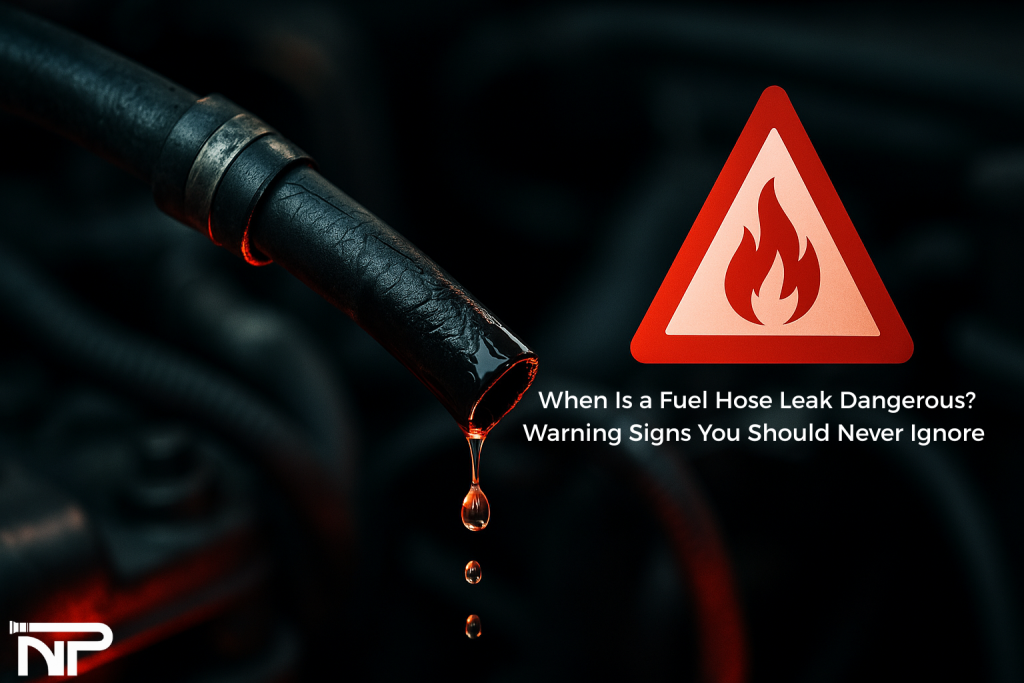
The fuel hose is one of the most critical components of a vehicle’s fuel delivery system. When damaged, it can not only compromise engine performance but also pose a serious threat to the safety of both the driver and passengers.
In this article, we’ll take an in-depth look at when a fuel hose leak becomes dangerous, the warning signs to watch out for, how to detect a leak, and—most importantly—how to prevent it.
What Is a Fuel Hose Leak and Why Should It Be Taken Seriously?
A leak occurs when part of the fuel delivery system—most often the hose—fails due to cracks, wear, or faulty connections. This allows fuel or fuel vapors to escape and come into contact with engine heat or sparks, dramatically increasing the risk of fire.
(Official statistics from the NFPA – National Fire Protection Association – cite fuel system failures as one of the leading causes of vehicle fires.)
Even a minor leak can turn into a major hazard in a split second. That’s why a fuel hose leak should be considered one of the most serious technical threats to your vehicle.
Five Situations That Indicate a Dangerous Fuel Hose Leak
1. Leaks Near the Exhaust or Engine
A leaking hose next to hot engine components acts like a ticking time bomb.
2. Strong Smell of Gasoline Inside or Around the Vehicle
If you notice a fuel odor—even when the engine is off—it could be due to a leaking fuel hose.
3. Gasoline Stains or Puddles Under the Car When Parked
Dark or damp spots beneath your vehicle are a serious warning sign of a leak.
4. Unusual Increase in Fuel Consumption
If fuel efficiency drops without any change in driving habits, the fuel system might be leaking.
5. Use of Non-Standard Parts
Improper hoses or weak clamps are leading causes of fuel hose leaks.
Key Questions Every Driver Should Ask:
-
When was the last time I inspected the fuel hose?
-
Did I choose a reliable brand when replacing the hose?
-
Have I recently smelled gasoline in the garage or cabin?
A Practical Guide to Detecting a Fuel Leak
Step 1: Start the car in a well-ventilated outdoor space
Step 2: Visually inspect the underside and around the engine
Step 3: Watch for unusual smells or clicking sounds
Step 4: Use a flashlight to trace the fuel hose from the tank to the injectors
Step 5: At the slightest doubt, turn off the engine and contact a mechanic
Why You Should Never Delay Fixing a Fuel Leak
-
80% of vehicle fires are caused by fuel or electrical system failures
-
A single spark can turn a small leak into a fire in under 2 minutes
-
Cars using non-standard fuel hoses are three times more likely to explode
How to Prevent Fuel Hose Leaks
-
Use standard hoses resistant to fuel and heat
-
Inspect the fuel system every 6 months
-
Never use tape or adhesive for sealing fuel hoses
-
Replace hoses every 4–5 years
-
Choose reputable brands like Niko Payam Sanat Giti for quality hoses and fittings
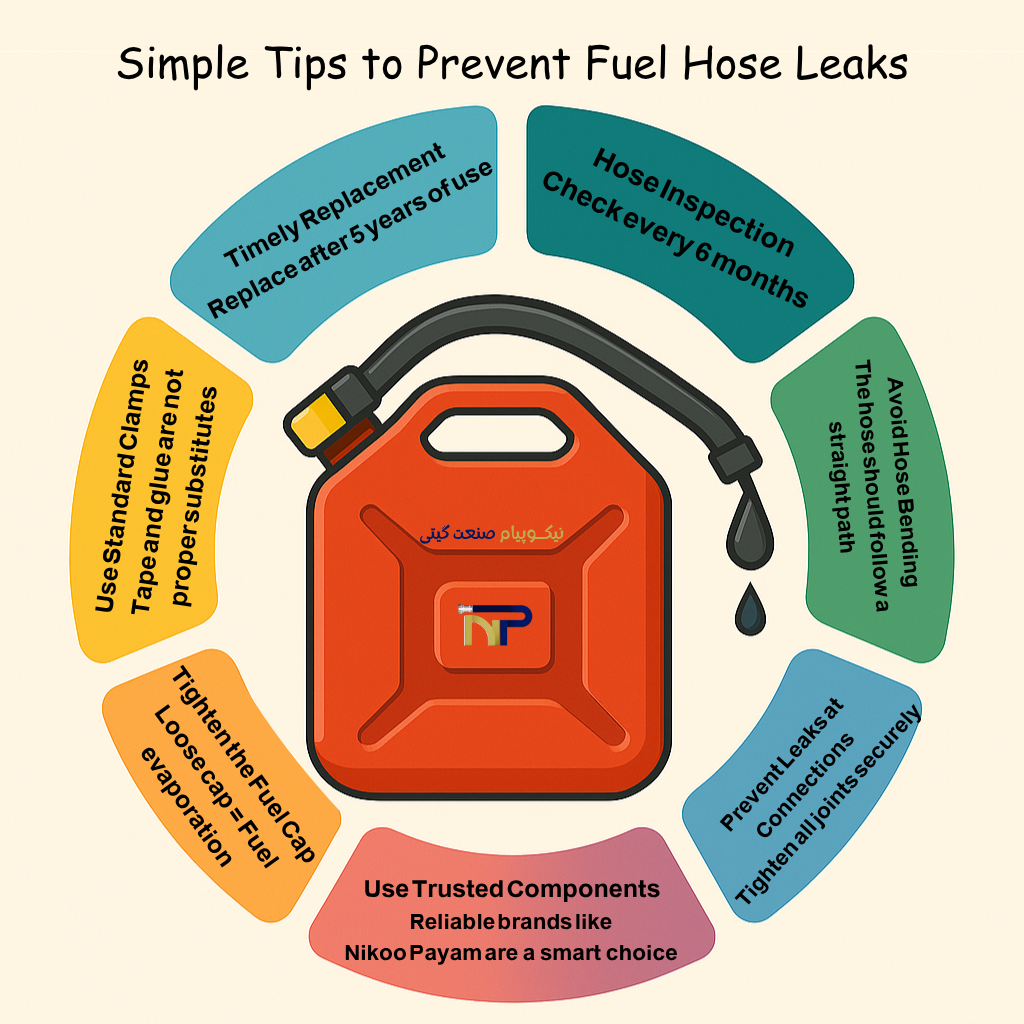
Infographic: Simple Tips to Prevent Fuel Hose Leaks
Infographic: Simple Prevention Tips for Fuel Hose Leaks
(Design suggestion: include visual checklist with icons for hose inspection, odor check, and brand verification)
Final Thoughts: A Fuel Hose Leak = A Serious Threat
A leak may start as a few drops, but ignoring it can put your life, your family, and your vehicle at serious risk. With a simple inspection and a few preventative steps, you can avoid both high repair costs and life-threatening situations.
Is Your Vehicle’s Fuel Hose Safe?
If you have even the slightest doubt, take action today. Your safety is worth it.
Frequently Asked Questions (FAQ)
1. Are all leaks caused by the fuel hose?
No. Leaks can also originate from the fuel tank, injectors, or connectors. However, in most cases, the fuel hose is the primary source.
2. Does an old hose always leak?
Not necessarily. Some hoses may appear intact but have lost their flexibility and are prone to cracking under pressure.
3. Can fuel leaks only be detected by smell?
Most often yes, but sometimes visual signs, unusual sounds, or changes in fuel consumption are the only clues.