Hoses are seemingly simple but vital components in a vehicle. Their main function is to transfer various fluids, oils, fuel, and even air across different parts of the vehicle. Without these hoses, the operation of many vehicle systems would be disrupted, potentially leading to serious issues and costly repairs. In this article, we aim to examine the different types of car hoses in detail, fully explain the role of each, identify the signs of wear or damage, and share key tips for selecting and maintaining them.
✨ The Importance of Using High-Quality Hoses
Vehicle hoses must withstand harsh conditions such as high temperatures, high pressure, corrosion, and abrasion. Using low-quality hoses might not cause immediate problems but can lead over time to fluid leaks, reduced system efficiency, and even serious damage to the engine or braking system. For this reason, choosing high-quality and standard hoses is extremely important.
🗂️ Categorization of Vehicle Hoses
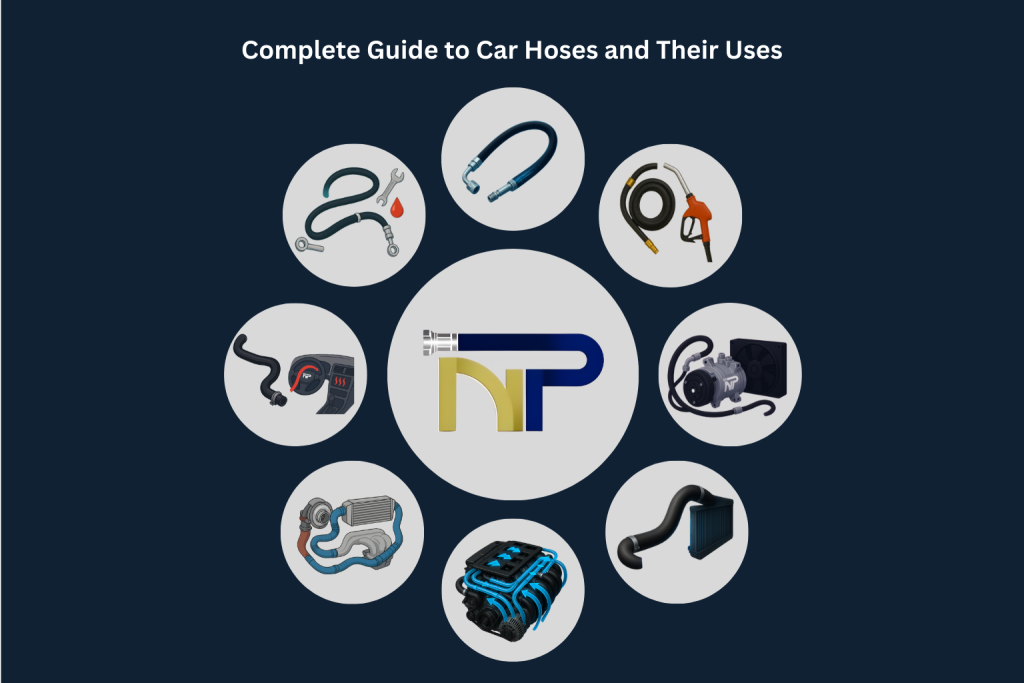
Vehicle hoses can be categorized based on the type of fluid or gas they carry as well as their application in the vehicle. Below are the most important types of car hoses and their respective uses:
🛑 Brake Hoses
Brake hoses are among the most critical parts of the vehicle’s braking system, responsible for transferring brake fluid from the master cylinder to the wheels. Failure of this hose can reduce braking power and even cause accidents.
Signs of failure: brake fluid leaks, reduced braking efficiency, formation of bubbles in the hydraulic system, and a vibrating brake pedal.
Important note: Always use standard brake hoses to ensure the safety of the braking system.
For a detailed guide on identifying failures and replacing brake hoses, you can read the article Complete Guide to Vehicle Brake Hoses.
⛽ Fuel Hoses (Gasoline)
These hoses transfer fuel from the tank to the engine and must withstand pressure and resist chemical corrosion. Failure can lead to fuel leaks, reduced engine performance, and fire hazards.
Signs of failure: strong gasoline smell, fuel leaks under the vehicle, reduced engine power and performance.
Note: Fuel hoses should have reinforced layers and be leak-resistant.
For more tips on selecting fuel hoses, read the article Fuel Hose Selection Guide.
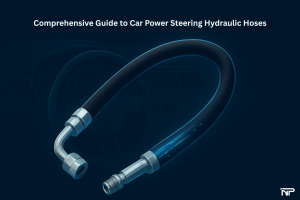
🔄 Power Steering Hydraulic Hoses
In vehicles with hydraulic steering systems, these hoses transfer high-pressure hydraulic fluid. Failure can make steering stiff and heavy or cause fluid leaks.
Signs of failure: stiff steering, red fluid leaks under the vehicle, unusual noises when turning the wheel.
For more detailed information, see Power Steering Hydraulic Hoses and Maintenance.
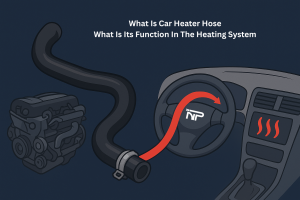
🔥 Heater Hoses
These hoses transfer hot engine coolant to the heater core to warm the cabin. Failure can cause water leaks, reduced cabin heating, and unpleasant odors.
Signs of failure: water leaks, antifreeze smell inside the vehicle, insufficient heating.
For more details, see the article Heater Hoses: Signs of Failure and Proper Replacement.
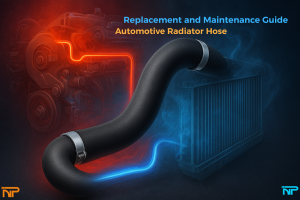
🌊 Radiator Hoses
Radiator hoses transfer coolant between the engine and radiator. They must withstand high temperatures, and failure can cause engine overheating and serious damage.
Signs of failure: hose swelling or cracking, coolant leaks, rising engine temperature.
To learn proper replacement and maintenance methods, see Vehicle Radiator Hose Replacement and Maintenance Guide.
❄️ AC Hoses
Vehicle AC hoses transfer refrigerant in the air conditioning system. Failure can reduce cooling efficiency and cause refrigerant leaks.
Signs of failure: reduced AC cooling, hissing sounds from leaks, oil stains on hoses.
For fixing leaks and repairs, see the article AC Hose Leak Repair Guide.
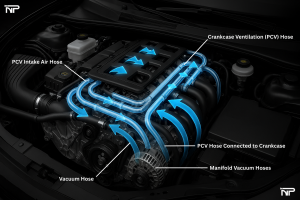
🌬️ Vacuum and PCV Hoses
Vacuum and PCV hoses regulate engine negative pressure and return oil vapors to the intake system. Failure causes unstable engine RPM and increased fuel consumption.
Signs of failure: unstable RPM, increased fuel consumption, smoke or oil odor in the cabin.
For more information, see the article Function and Failures of Vehicle Vacuum and PCV Hoses.
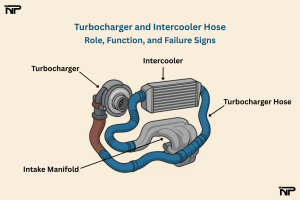
🌀 Turbocharger and Intercooler Hoses
In turbocharged vehicles, these hoses transfer compressed air from the turbo to the intercooler and then to the engine. Failure can reduce engine performance and increase fuel consumption.
Signs of failure: reduced engine power, whistling noise while driving, black smoke from the exhaust.
The article Turbocharger and Intercooler Hoses Overview can provide useful information.
🛠️ Key Maintenance Tips for Vehicle Hoses
- Regularly inspect hoses and check for cracks, swelling, or leaks.
- Immediately repair or replace any damaged or worn hoses.
- Always use high-quality hoses from reputable brands to ensure vehicle safety and longevity.
- Proper installation with standard clamps prevents potential issues.
❓ Frequently Asked Questions (FAQ)
How often should vehicle hoses be replaced?
Typically every 4 to 5 years or around 80,000 to 100,000 kilometers, and sooner if any signs of wear are observed.
Can non-standard hoses be used?
Non-standard or counterfeit hoses can be used, but it is strongly discouraged. These hoses lack the necessary durability and safety, potentially causing vehicle damage or serious hazards.
How can the lifespan of radiator hoses be increased?
Regular inspections, cleaning the cooling system, using standard hoses and clamps, and timely replacement of worn hoses can extend the lifespan of radiator hoses.
What are the most important vehicle hose standards?
The ISO 6826, SAE J20, and IATF 16949 / ISO 9001 are among the most common and globally recognized standards for vehicle hoses.
✅ Conclusion
As you can see, different types of car hoses play a crucial role in the operation and safety of various systems. By choosing high-quality hoses and following maintenance tips, you can ensure better vehicle performance and personal safety.