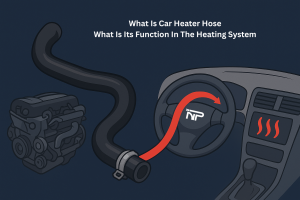
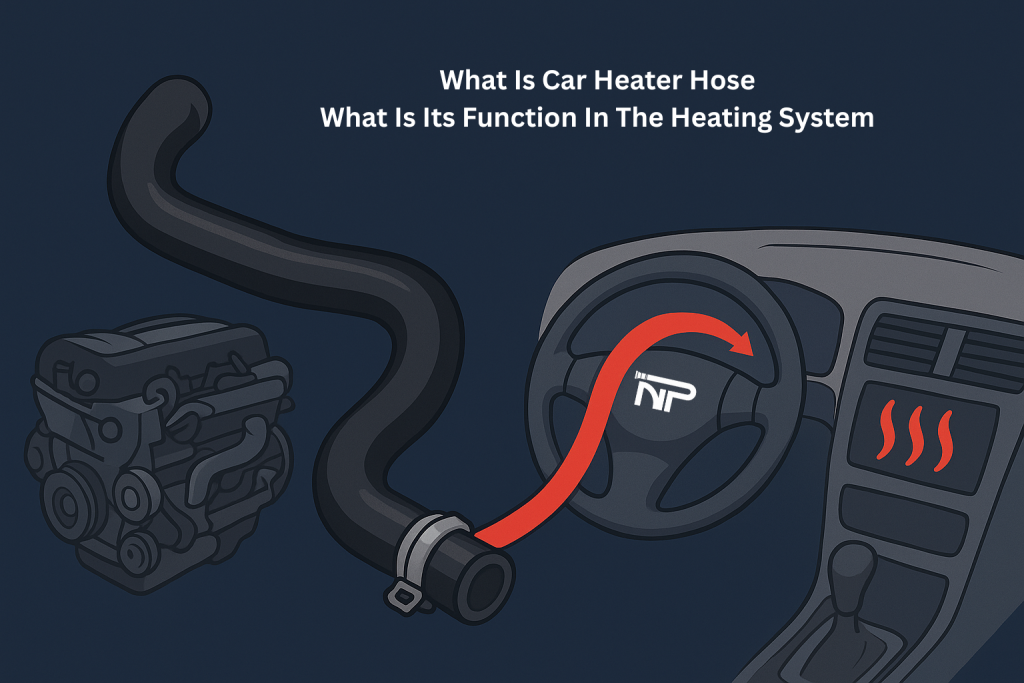
In a car’s heating system, a combination of mechanical and hydraulic components work together to keep the cabin warm and comfortable during cold days. One of the most important yet often overlooked parts is the car heater hose. This hose provides a path for hot coolant from the engine to the heater core, transferring heat to the air that enters the vehicle’s interior.
Besides its vital role in cabin heating, the heater hose is also connected to the overall coolant system. Any leak or rupture can lower coolant levels, impair heater performance, and even cause engine overheating.
Importance of the Car Heater Hose 🔥
At first glance, the car heater hose may seem like a simple rubber tube, but it performs a crucial function. Hot coolant exiting the engine passes through this hose to reach the heater core, transferring heat to the air that is then directed into the cabin.
Its importance can be summarized in several points:
-
Ensures heating system performance: Without a healthy hose, hot coolant cannot reach the heater core.
-
Protects the engine: A leaking hose lowers coolant levels and increases the risk of engine overheating.
-
Driver and passenger safety: Proper heater operation prevents window fogging in cold weather.
For these reasons, it is recommended to choose high-quality, standard-compliant hoses. To explore and select the best models, check our products page.
Material and Construction 🛠️
Car heater hoses are usually made from heat-resistant rubber such as EPDM. This material withstands high temperatures, pressure, and prolonged contact with chemicals like coolant. In some models, especially heavy-duty or sports cars, reinforced silicone hoses are used for extra durability under harsh conditions.
Features of a high-quality heater hose include:
-
Temperature resistance between 80°C and 120°C
-
Resistance to corrosion and chemicals
-
High flexibility for installation on curved paths
-
Multi-layer construction to prevent tearing and swelling
Types of Car Heater Hoses 🧩
Heater hoses come in different types depending on the vehicle and cooling system design:
-
Straight hose: No bends, ideal for simple, linear paths.
-
Bent or angled hose: For paths that require directional changes.
-
Reinforced silicone hose: Contains internal fibers for extra strength.
-
Multi-layer durable hose: Multiple layers of rubber and fibers to handle high pressure and temperature.
Choosing the right type depends on engine design, available space, and specific vehicle requirements.
Heater Hose Failure Signs 🚨
Heater hoses wear out over time due to constant use and high temperatures. Common signs of failure include:
-
Coolant leaks: Green or orange stains under the car or around hose connections.
-
Coolant smell inside cabin: Usually indicates internal leaks or hose cracks.
-
Reduced heater performance: Insufficient hot coolant reaching the heater core.
-
Hose deformation: Cracks, bulges, or swelling.
Replacement Procedure 🪛
Replacing a heater hose is relatively simple but requires care:
-
Park the car on a level surface and turn off the engine.
-
Allow the engine to fully cool to avoid burns.
-
Drain the coolant.
-
Loosen the clamps on both ends and remove the old hose.
-
Install the new hose and tighten the clamps securely.
-
Refill the coolant and bleed the system.
Maintenance Tips 📝
To extend the heater hose’s lifespan and prevent failure:
-
Check hose routing every six months.
-
Inspect the heater hose when replacing coolant.
-
Use high-quality, standard coolant to prevent hose rubber degradation.
For more information on other car hoses and their applications, see our Comprehensive Guide to Car Hoses and Their Uses.
FAQs ❓
1. What is the lifespan of a car heater hose?
On average, 5–7 years, but quality and usage conditions may shorten or extend this period.
2. Can a heater hose be repaired?
Due to high pressure and temperature, repairs are usually temporary; full replacement is recommended.
3. What are the risks of a leaking heater hose?
Coolant loss, reduced heater performance, and potential engine overheating.
4. When is the best time to replace a heater hose?
At the first sign of cracks, swelling, leaks, or during major cooling system service.
Conclusion 📌
Despite its simple appearance and small size, the car heater hose plays a critical role in cabin heating and engine health. Choosing a high-quality product, proper installation, and regular maintenance can prevent costly problems. Given its importance, always check its condition during periodic service and replace it immediately if needed to ensure warmth and safety during cold weather.