Importance of Vacuum & PCV Hoses 🚗
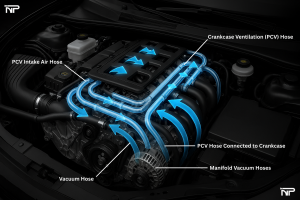
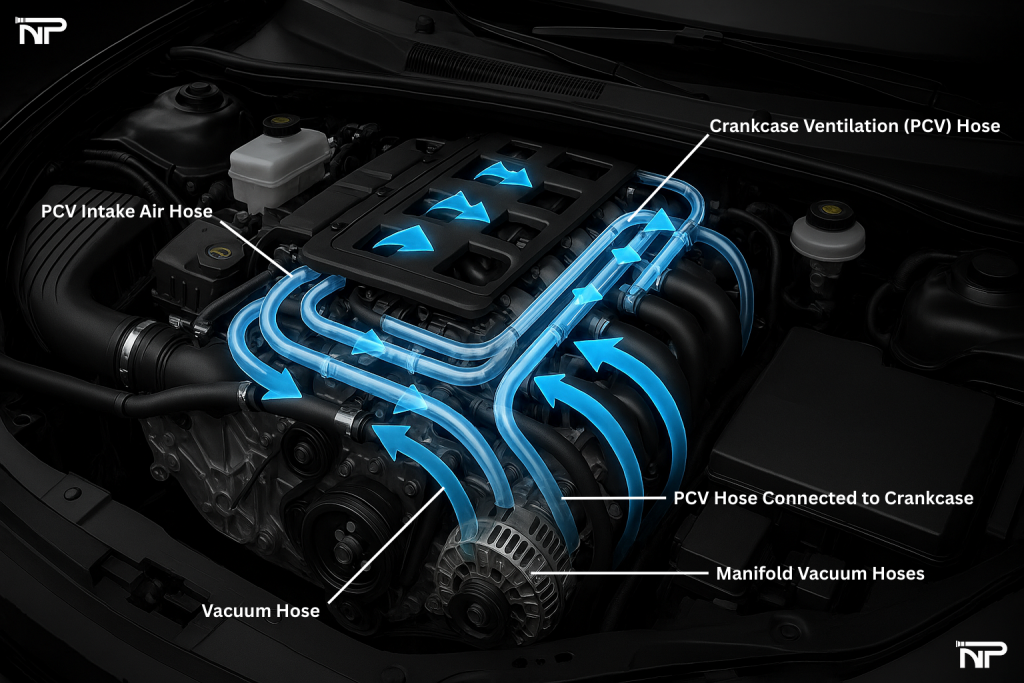
Vacuum and PCV hoses may seem simple at first glance, but they play a vital role in engine performance. The vacuum hose creates negative pressure for proper brake function and engine control, while the PCV valve recirculates crankcase vapors back into the combustion cycle.
This process helps:
-
Reduce fuel consumption
-
Lower environmental pollution
-
Increase engine oil life
-
And ultimately improve engine efficiency.
Ignoring failures in these parts can lead to higher emissions, reduced acceleration, premature engine wear, and costly repairs. Regular inspection and maintenance of vacuum and PCV hoses are therefore essential.
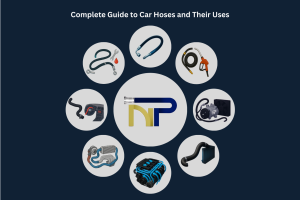
For more on car hose types and failure signs, read our article Comprehensive Guide to Car Hoses and Their Uses.
Material and Structure of Vacuum & PCV Hoses 🧩
-
Vacuum Hose: Usually made from reinforced rubber, neoprene, or silicone. Silicone is preferred in modern cars for its high resistance to heat and oil.
-
PCV Valve: A small, sensitive mechanical part acting as a one-way valve. Usually made of heat-resistant plastic or lightweight metal, with an internal spring and pin controlling vapor flow.
The durability of these parts depends on material quality. Poor hoses can cause premature cracking, air leaks, and engine damage.
Types of Vacuum & PCV Hoses 🔧
-
Standard Vacuum Hose: Used in economy and basic cars.
-
Durable Silicone Hose: For high engine temperatures or harsh driving conditions.
-
Standard PCV Valve: Common in most daily passenger cars.
-
Turbo Engine PCV Valve: Designed for higher pressure and temperature, with a stronger structure.
Choosing the right type depends on vehicle model and driving conditions.
Signs of Vacuum & PCV Hose Failure ⚠️
When vacuum and PCV hoses fail, clear symptoms appear:
-
🚩 Increased fuel consumption due to disrupted air-fuel ratio.
-
Loss of engine power and acceleration when pressing the gas.
-
Idle fluctuations, especially when the car is cold.
-
Blue or black smoke from the exhaust indicating crankcase vapors entering combustion.
-
Oil leaks around the engine due to increased internal pressure.
-
Check engine light triggered by ECU error codes.
If you notice these signs, replace or inspect the component immediately.
How to Replace Vacuum & PCV Hoses 🔄
-
Turn off the car and allow the engine to fully cool.
-
Locate the vacuum hose and PCV valve (usually on the valve cover or intake manifold).
-
Remove clamps and connectors, then detach the faulty part.
-
Carefully install the new part in place.
-
Secure clamps and check for leaks.
💡 Tip: Always use original, high-quality parts to extend engine life. See suitable products on our products page.
Maintenance Tips for Vacuum & PCV Hoses 🛠️
-
Regularly check hoses for cracks, leaks, or loose clamps.
-
Replace the PCV valve every 40,000–60,000 km to maintain engine health.
-
Avoid strong detergents when cleaning the engine as they can damage rubber and plastic parts.
-
During regular servicing, ask your mechanic to inspect vacuum and PCV hoses.
FAQs ❓
1. What is the lifespan of vacuum and PCV hoses?
Typically 3–5 years or around 50,000 km, depending on part quality and driving conditions.
2. Can a vacuum hose failure trigger the check engine light?
Yes ✅ air leaks disrupt the air-fuel ratio and the ECU records an error.
3. Can the PCV valve be cleaned?
In some cars it can, but cleaning is temporary and replacement is recommended.
4. How do these failures affect the engine?
They can cause increased internal pressure, oil leaks, gasket damage, and even bearing damage.
Final Conclusion ✅
Vacuum and PCV hoses may be small, but they are critical to engine breathing. Proper function reduces fuel consumption, prevents pollution, extends engine life, and improves vehicle efficiency.
Given their importance, inspect or replace them at the first sign of failure. Using quality parts and proper maintenance can prevent costly engine repairs.