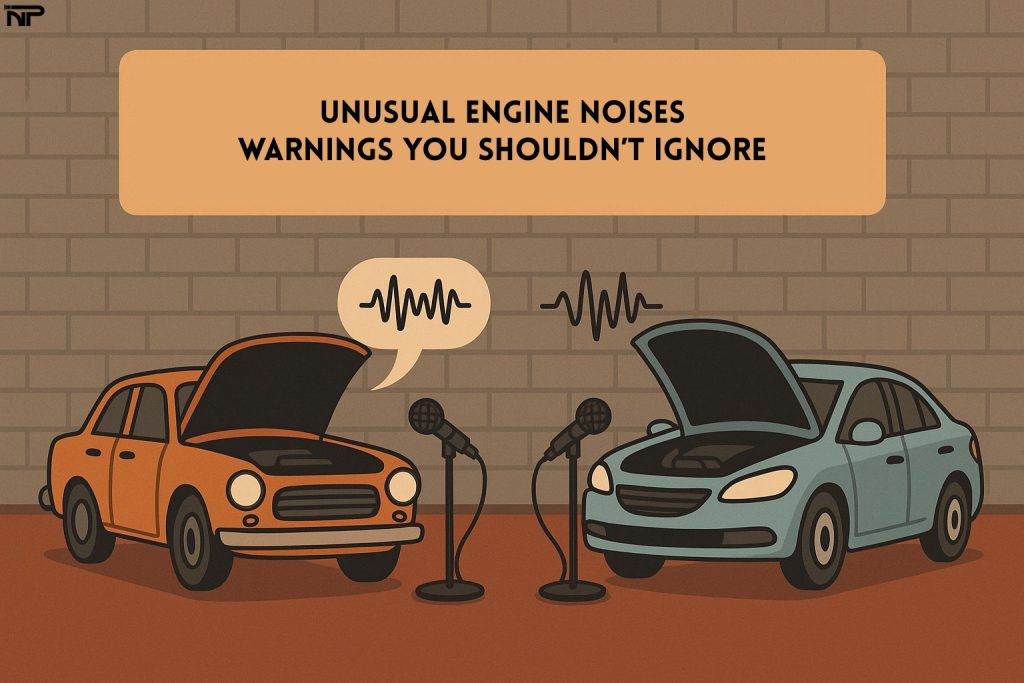
Every car has its own language. Sometimes it’s a muffled sound, sometimes a ticking, whining, or even a harsh metal-to-metal knock. If you’ve recently noticed unusual engine noises while driving or starting your car, take this warning seriously. Such sounds are not to be ignored—they may indicate deeper mechanical issues.
In this article, we’ll precisely and professionally explore what unusual engine noises mean, which part of the car each sound is related to, and the best time to take action.
Why Are Unusual Engine Noises Important?
Unusual engine noises often appear before serious mechanical failures. Paying attention to these sounds can save you from costly repairs. In fact, your engine is trying to communicate a problem in its own language. If the driver learns this language, they can take smart preventive measures.
Types of Unusual Engine Noises and Their Causes
🔊 Whining
-
Common cause: Worn timing belt or alternator belt
-
Sound feature: Continuous, high-pitched, and RPM-dependent
-
Solution: Check belt tension and replace if worn
🔊 Ticking
-
Common cause: Faulty spark plugs or crankshaft bearings
-
Sound feature: Intermittent, rhythmic, more noticeable at low RPM
-
Solution: Inspect ignition system, replace plugs and wires if needed
🔊 Knocking
-
Common cause: Incomplete combustion, poor fuel quality, or damaged piston
-
Sound feature: Hammering or knocking, often intense during acceleration
-
Solution: Use proper fuel, inspect engine components and lubrication
🔊 Sharp Metallic Noise
-
Common cause: Worn tappet or misadjusted valve
-
Sound feature: Sharp metallic contact, especially when cold
-
Solution: Have the tappet and camshaft checked professionally; perform regular maintenance
When Should You Take Unusual Engine Noises Seriously?
-
If the noise persists after the engine warms up
-
If the sound comes with power loss, vibration, or smoke
-
If the noise is accompanied by high fuel consumption or the check engine light
Ignoring such signs may result in serious internal engine damage.
Summary Table of Noises and Recommended Actions
| Sound Type | Likely Cause | Risk Level | Quick Action |
|---|---|---|---|
| Whining | Alternator/Timing belt | Moderate | Check belt tension |
| Ticking | Spark plug or bearing | High | Check ignition system |
| Knocking | Piston or fuel | Severe | Inspect engine |
| Metallic sound | Tappet or valve | High | Valve adjustment service |
How to Prevent Unusual Engine Noises
-
Use high-quality motor oil suitable for the season
-
Timely replacement of timing belt, filters, and spark plugs
-
Use reliable, standard fuel
-
Perform regular engine checkups every 20,000 to 30,000 km
-
Avoid aggressive driving when the engine is cold
Conclusion
Unusual engine noises aren’t just annoying—they’re warning messages from your car’s mechanical system. Carefully listening to these sounds is the key to preventing costly and unexpected failures. Whether it’s a subtle whine or a harsh knock, all these sounds are part of your car’s language telling you something’s wrong inside the engine.
If you’re hearing such noises and don’t know where to start, we recommend reading the article “Troubleshooting Common Car Problems: A Complete Guide to Vehicle Malfunctions“. That guide offers a comprehensive overview of the most frequent issues and helps you better understand your car’s language.