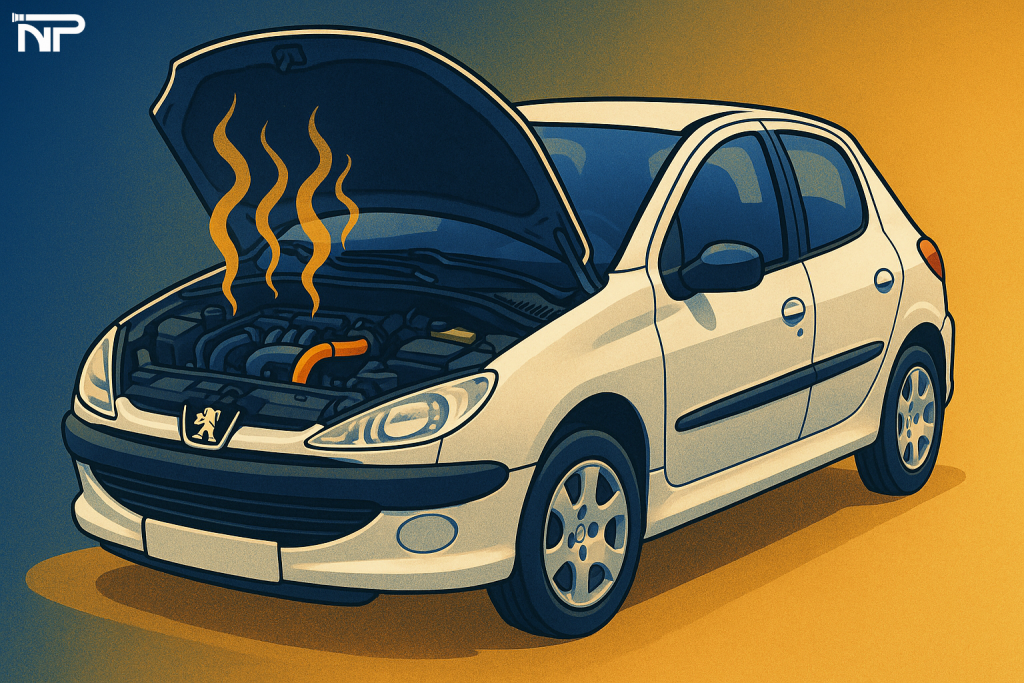
Peugeot 206 radiator hose overheat is a common concern for many drivers, especially during hot weather or heavy traffic conditions. If left unchecked, this issue can lead to serious engine damage, hose ruptures, or even a blown head gasket.
As an automotive expert, I will guide you through the root causes of Peugeot 206 radiator hose overheating, its warning signs, and immediate solutions to avoid costly repairs. Whether you’re stuck in traffic or on a long road trip, knowing how to manage overheating can save your engine—and your wallet.
🚗 Why Does the Radiator Hose of Peugeot 206 Overheat in Traffic?
1. Cooling Fan Failure
When your car is stuck in traffic, there’s little to no natural airflow to cool down the engine. In this case, the entire responsibility falls on the radiator fan. If the cooling fan is faulty, turns on too late, or doesn’t activate at all, it leads to rapid temperature rise.
- Engine coolant heats up quickly
- System pressure increases significantly
- Result: Peugeot 206 radiator hose becomes extremely hot.
✅ Fix: Check the fan relay, temperature sensor, and radiator fan using a diagnostic tool. Prompt repair prevents the radiator hose from swelling or bursting.
2. Blocked Radiator or Water Pump
Over time, deposits and mineral buildup can clog the radiator or water pump. This reduces coolant flow, resulting in heat concentration inside the engine and hoses.
- Upper hose gets extremely hot and bloated
- Some users reported the hose was too hot to touch
✅ Fix: Flush the cooling system with a descaling solution. If the blockage is severe, consider replacing the radiator entirely. This helps avoid frequent Peugeot 206 radiator hose overheat situations.
3. Low-Quality or Wrong Coolant
Using poor-grade antifreeze or tap water causes scale, foam, and early vaporization in the cooling circuit. This disrupts proper heat exchange and directly impacts the radiator hose.
- Results in pressure buildup and hose swelling
- Increased risk of Peugeot 206 radiator hose overheat even in short drives
✅ Fix: Always use a 50/50 mix of standard antifreeze and distilled water. Trusted brands like BASF or Prestone are highly recommended.
4. Air Trapped in the Cooling System
Air bubbles inside the cooling circuit can block circulation, leading to partial overheating of the engine and hoses. This often happens after improper coolant refills or leaks.
- Gurgling sound when opening the radiator cap
- Temperature gauge spikes without full engine heat
- Peugeot 206 radiator hose overheat occurs inconsistently
✅ Fix: Bleed the system thoroughly by opening the radiator valve and running the engine on an incline to release trapped air.
5. Faulty Thermostat
If the thermostat gets stuck closed, it traps hot coolant inside the engine, which builds up pressure and heat quickly.
✅ Result: High temperatures in just minutes, pressure overload, and inevitable radiator hose overheating in your Peugeot 206.
✅ Fix: Replace the thermostat with a model matching the engine specs—either 83°C or 89°C depending on your Peugeot 206 version.
🛠️ Practical Prevention Tips
| Action | Technical Insight |
|---|---|
| ✅ Check coolant level monthly | It should remain at MAX and appear clear |
| ✅ Replace antifreeze regularly | Every 12 to 18 months to avoid buildup |
| ✅ Test thermostat and radiator | Use diagnostics to check opening temperature |
| ✅ Avoid using tap water | Causes scaling and trapped air |
| ✅ Inspect radiator hoses | Soft or swollen hoses may soon fail |
📌 FAQ: Peugeot 206 Radiator Hose Overheating
❓ Is it dangerous if only the upper radiator hose is hot?
Yes. A hot and rigid upper hose might indicate a stuck thermostat or a blocked radiator return path.
❓ My Peugeot 206 radiator hose feels extremely hot—normal?
If you’re in traffic, some heat is expected. But if you notice high pressure, steam, or burning smells, act immediately to prevent serious engine damage.
❓ Does flushing the radiator help?
Absolutely. Cleaning out sediment and scale is one of the most effective ways to prevent recurring Peugeot 206 radiator hose overheat issues.
🖚 Expert Summary
Never ignore Peugeot 206 radiator hose overheat symptoms. It often stems from poor coolant circulation, fan malfunctions, air bubbles, or a stuck thermostat. By following these expert recommendations, you can extend the life of your cooling system and avoid major repairs.
React early to warning signs and never rely on low-grade replacement parts. Prevention is far cheaper than a blown engine.