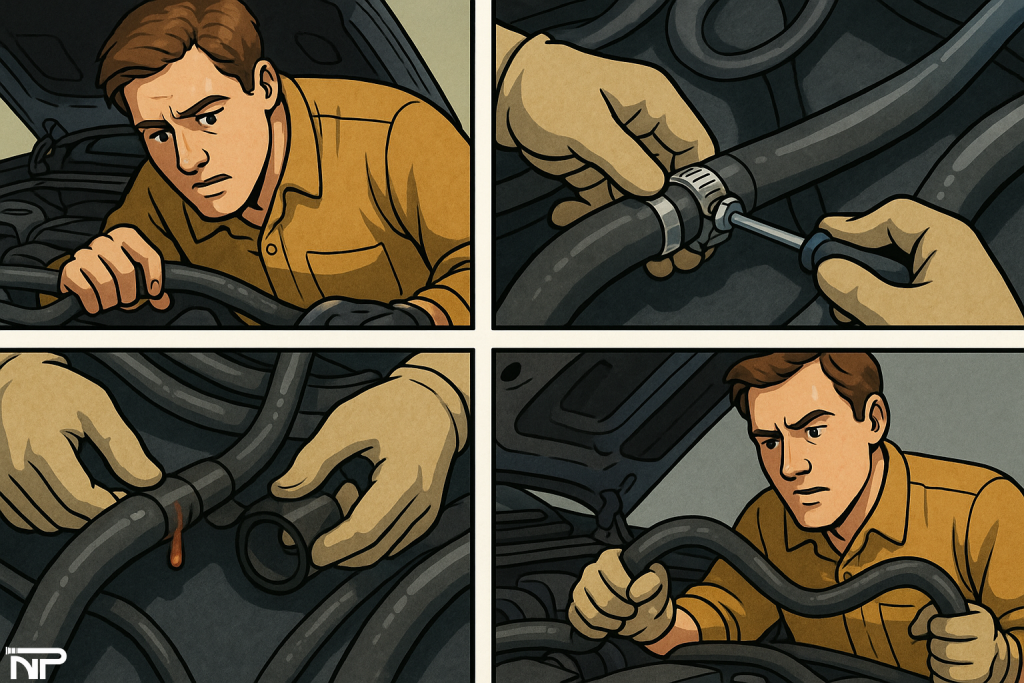
Repairing a fuel hose is often the first thing that comes to mind in an emergency. Fuel leaks not only increase consumption but also release strong odors and pose serious safety risks—including the potential for explosion. In such situations, drivers naturally seek quick and cheap solutions. But is fuel hose repair truly safe and logical?
In this article, we explore when fuel hose repair might be acceptable, which methods are common, what risks are involved, and when hose replacement becomes the only smart choice.
🔧 Can a Fuel Hose Be Repaired?
In specific cases—like surface cracks or slight leaks at the connector—temporary repair may work. Some drivers use fuel-resistant adhesives, clamps, or hose pieces just to make it home or to a mechanic. But keep in mind: fuel hoses deal with high pressure, engine heat, vibration, and harsh chemicals. In such conditions, non-standard repairs pose more of a hidden danger than a real solution.
⚠️ Real Risks of Fuel Hose Repair
Improper repairs can lead to serious consequences:
-
🔥 Fire hazard: Leaking fuel near hot engine parts can cause ignition.
-
😷 Toxic fumes: Gasoline vapor is carcinogenic and dangerous—especially in enclosed vehicles.
-
🚗 Engine performance drop: Leaks reduce fuel pressure and affect performance.
-
🌍 Environmental harm: Constant leaks can pollute air and soil.
🛠️ Comparison Table: Fuel Hose Repair Methods
| Method | Common Use | Safety Level | Suggested Duration | Expert Note |
|---|---|---|---|---|
| Fuel-resistant glue | Sealing small surface cracks | Low | Under 12 hours | Emergency use only |
| Double metal clamps | Tightening connection leaks | Medium | Just to reach mechanic | Needs careful and tight installation |
| Cutting & reconnecting | Replacing damaged section | Fairly safe | Temporary but stronger | Use proper fuel-resistant connectors |
| Full hose replacement | Installing a new hose | Very safe | Permanent | The only truly safe and reliable solution |
⛔ When It’s Time to Replace the Fuel Hose
Repairs only make sense for small, visible, and temporary issues. In many cases, repairs just delay a bigger failure. Clear signs for replacement include:
-
Deep or widespread cracks
-
Brittle or hardened hose surface
-
Repeated or hard-to-locate leaks
-
Over 5 years of use or 80,000 km
-
Damage near pump, manifold, or filter
In such cases, replacing the hose with a standard model is the only smart choice.
🔄 Recommended by Nikoo Payam Sanat Giti
Nikoo Payam offers a range of fuel hoses with international certifications such as IATF 16949 and ISO 7840.
These hoses are resistant to fuel, high pressure, heat, and vibration—perfect for passenger cars, pickups, light trucks, and machinery.
✅ Final Verdict
Repairing a fuel hose is only a short-term emergency solution. Using glue or clamps instead of replacing the hose may lead to serious injury, property damage, or environmental harm.
If you notice any sign of leakage or hose aging, the safest, smartest, and most cost-effective action is to replace it with a certified, high-quality fuel hose.