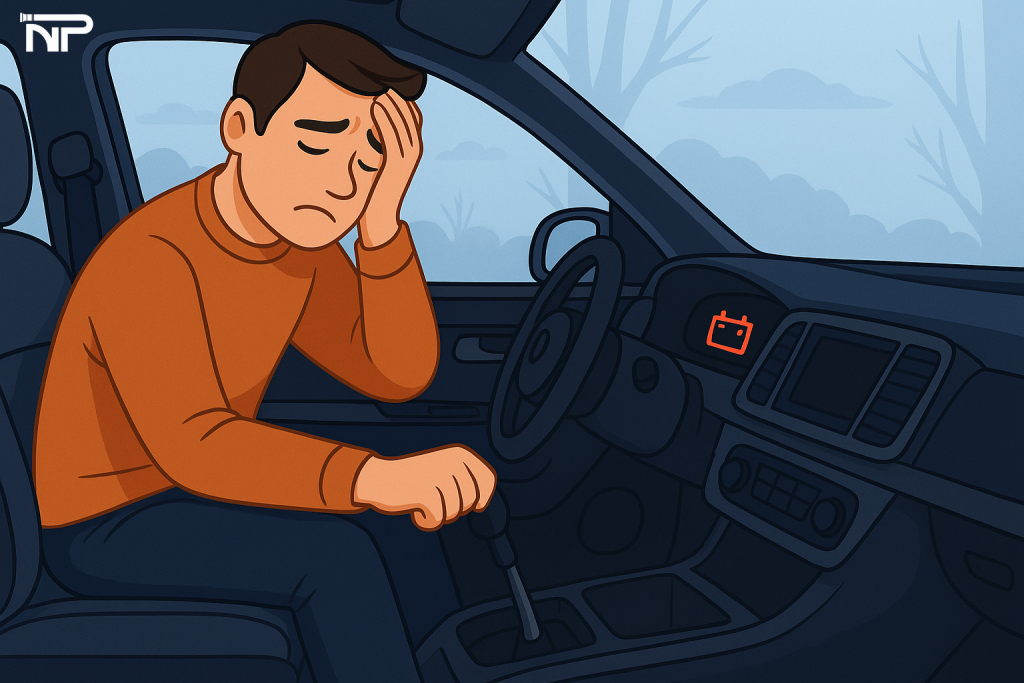
Ever rushed to your car in the morning, turned the key, and… nothing? No dashboard lights, no engine sound — just silence.
If your car won’t start, you’re not alone. It’s one of the most common and confusing problems drivers face. The good news? Most causes of why your car won’t start are preventable or fixable — you just need to know where to begin and how to troubleshoot.
In this guide, we’ll walk you through the most likely reasons why your car won’t start and offer quick or professional solutions for each.
🔍 Summary Table: Common Reasons a Car Won’t Start
| Possible Cause | Symptoms | Can the Driver Check? |
|---|---|---|
| Weak or Dead Battery | Dim lights, clicking noise, no reaction | ✅ Yes |
| Corroded Battery Cable/Terminals | Weak start, power interruptions | ✅ Yes |
| Faulty Ignition or Immobilizer | Steering lock, security warning | ❌ No |
| Fuel Pump or Filter Issue | Engine cranks but won’t start | ❌ No |
| Starter Motor Failure | No engine noise, complete silence | ❌ No |
| ECU or Sensor Issues | Cranks but won’t start, check engine light, error codes | ❌ No |
1. Battery: The #1 Reason Your Car Won’t Start
A weak or dead battery is the most common reason your car won’t start. If you hear a click or see dim lights when turning the key, the battery is likely the issue.
How to Identify It:
-
Use a multimeter: below 12V = weak battery
-
Try jump-starting or a backup battery
-
Check the battery’s age (typically lasts 2–4 years)
Fix:
Recharge if it’s drained; replace if it’s old or damaged.
2. Cables and Connections: When Power Can’t Reach
Even if the battery works, your car won’t start if the cables are loose or corroded — especially the ground connection.
How to Identify It:
-
Slow or choppy engine cranking
-
Flickering dashboard
-
Sparks while turning the key
Fix:
Clean terminals, tighten bolts, and check grounds.
3. Faulty Ignition or Anti-Theft System (Immobilizer)
If your car won’t start despite having power, the ignition switch or anti-theft system may be to blame. Many modern cars won’t start if the immobilizer doesn’t recognize the key.
How to Identify It:
-
Steering is locked
-
No crank or click when turning the key
-
Messages like “Immobilizer Active” appear
Fix:
You’ll need a diagnostic tool and possibly professional help.
4. Fuel System Issues: When the Engine Is Starving
Sometimes, your car won’t start because it’s simply not getting fuel. A faulty fuel pump or clogged filter is often the culprit.
How to Identify It:
-
No fuel pump sound
-
No fuel smell
-
Starts briefly, then stalls
Fix:
Replace the fuel filter every 20–30K km. Test or replace the pump. Use diagnostics to measure pressure.
5. Starter Motor Failure: When the Engine Is Silent
If you hear nothing but a click, the starter motor might be the issue. Your car won’t start even if the battery is fine.
How to Identify It:
-
Total silence when turning the key
-
Just a “click” noise
-
Sometimes tapping the starter helps briefly
Fix:
Test with direct power or diagnostic tools. Usually needs full replacement.
6. ECU or Sensors: When the Brain Fails
The ECU decides if your car should start based on data from sensors. If key sensors fail (like crankshaft or coolant temp), your car won’t start.
How to Identify It:
-
Cranks but won’t fire
-
Diagnostic codes like P0335 or P0606
-
Check engine light remains on or blinks
Fix:
Run diagnostics, test/replace sensors, or reset ECU as needed.
📋 Quick Checklist Before You Call the Mechanic
Before panicking, check these yourself:
-
🔲 Is the battery voltage okay?
-
🔲 Are cables clean and tight?
-
🔲 Does the key turn properly?
-
🔲 Do you hear the fuel pump?
-
🔲 Does the engine crank or click?
-
🔲 Any warning lights or error messages?
❓ FAQ – Car Won’t Start
Why does my car just click and not start?
Most likely, the battery or starter is faulty. Test both.
What if my car has power but won’t start?
Could be the immobilizer, fuel system, or ECU. Use diagnostics.
Can I fix a car that won’t start on my own?
Yes, in many cases — especially battery, cables, or fuel-related issues.
✅ Final Summary
When your car won’t start, it may seem confusing or even a bit intimidating — but in reality, most causes are easy to understand and diagnose with just a little guidance. From the battery and wiring to the fuel pump, ECU, or sensors, many issues are identifiable with a step-by-step check.
And if you want a broader understanding of other common car problems and how to deal with them, be sure to check out this
complete troubleshooting guide.