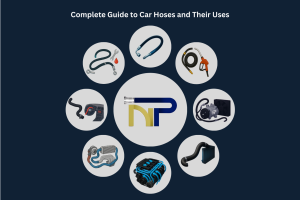

In the complex and engineered world of automobiles, some seemingly simple parts play a fundamental role in the safety, performance, and longevity of the system. Car hoses are one such essential component — flexible and durable pathways for various fluids, from fuel and oil to steam, water, and air. Although this small part often goes unnoticed, its evolution over time has significantly contributed to advancements in automotive technology.
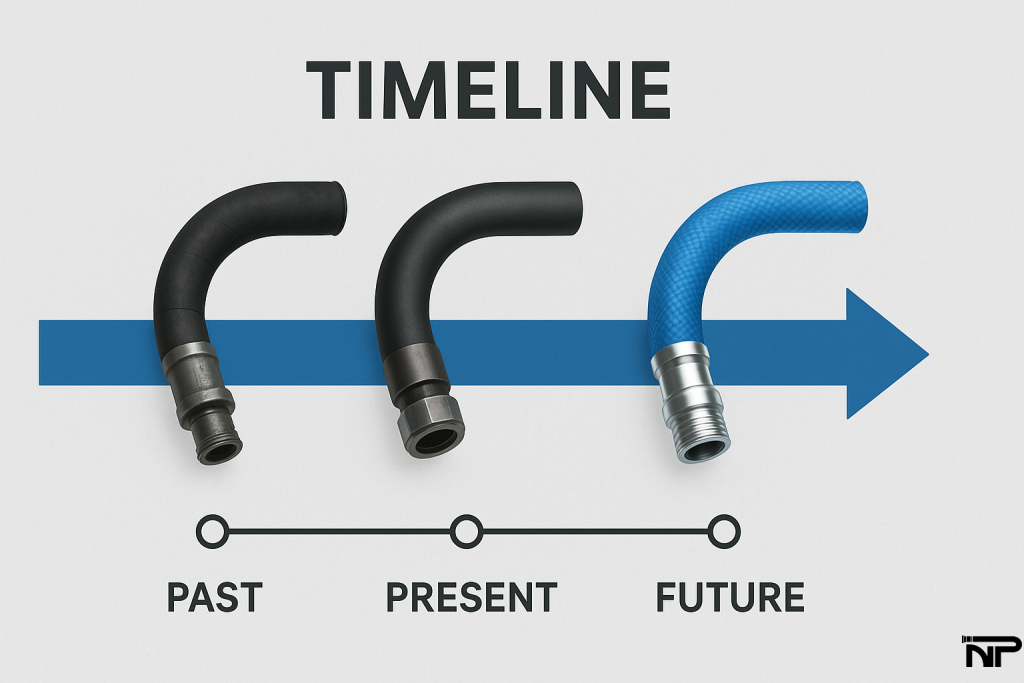
In this article, we explore the evolution of car hoses from their early beginnings to the advanced generations of today, and we take a look at a future where these components will also be part of smart vehicles.
The Beginning: Early Car Hoses and Technical Limitations
In the first production cars of the early 20th century, car hoses were primarily made of basic materials such as natural rubber, tar-impregnated fabric, or even flexible metals. These hoses could not withstand high temperatures, pressure, or continuous contact with gasoline, often resulting in leaks, cracks, or ruptures.
In the absence of defined standards, the quality and lifespan of car hoses varied greatly. Therefore, the need for improvements in materials and design was evident from the start.
Materials Revolution: The Rise of High-Performance Polymers
With advancements in industrial chemistry, materials like Neoprene, Nitrile (NBR), and EPDM were introduced into the automotive hose industry. These polymer compounds not only offered superior resistance to heat and pressure but also showed greater durability against fuel, engine oil, acids, and gases.
Later developments included the addition of reinforcement layers to car hoses — such as polyester fibers, nylon threads, and even metal wires — to control elongation and enhance strength.
Design Evolution: From Simple Part to Engineered System
In recent decades, the design of car hoses has moved away from uniformity and toward multilayered and specialized structures tailored to each vehicle system. For example:
-
Fuel vapor hoses are specifically designed to prevent the escape of toxic gases.
-
Brake hoses must withstand very high hydraulic pressure and are therefore reinforced with braided fibers.
-
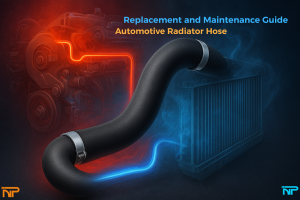
Radiator hoses must resist sudden temperature changes and continuous vibrations.
This specialized approach has resulted in longer service life, reduced risk of failure, and improved overall hose performance.
Smart Technologies Enter the Car Hose Industry
With the digitalization of vehicles, car hoses have entered a new phase of development. Today, some hoses are equipped with sensors that monitor internal pressure, temperature, and leakage — sending real-time data to the vehicle’s ECU.
These smart car hoses are currently used mostly in industrial vehicles, medical equipment, and electric vehicles, but they are expected to soon become standard in mass production as well.
The Role of International Standards and Certifications
Compliance with global standards such as IATF 16949 and ISO 9001 ensures that every car hose undergoes rigorous testing procedures, including:
-
Heat aging test
-
Burst pressure test
-
Fuel permeation test
This level of quality control not only protects the end user but also ensures the long-term reliability and performance of the vehicle.
A Look Ahead: Car Hoses in Next-Gen Vehicles
With the rise of electric and hybrid vehicles, car hoses are also adapting to new demands. Instead of fuel delivery, priority is now given to battery cooling, vapor transfer, and compressed air control in advanced systems.
There’s also a growing trend toward the use of lighter, biodegradable polymers and nanocomposites, helping reduce vehicle weight and increase environmental sustainability.
Final Conclusion
Car hoses have undergone a journey full of change, improvement, and innovation — from raw materials and simple designs to advanced technologies. Each phase of this evolution has aimed to enhance safety, reduce costs, and optimize vehicle performance.
Although hoses may seem like small details at first glance, they play a critical role in the optimal functioning of a vehicle’s systems. Choosing car hoses that meet current technologies and international standards is essential for maintaining vehicle health and ensuring driver safety.