5 Main Causes of Truck Air Hose Bursts and Engineering Solutions for Prevention
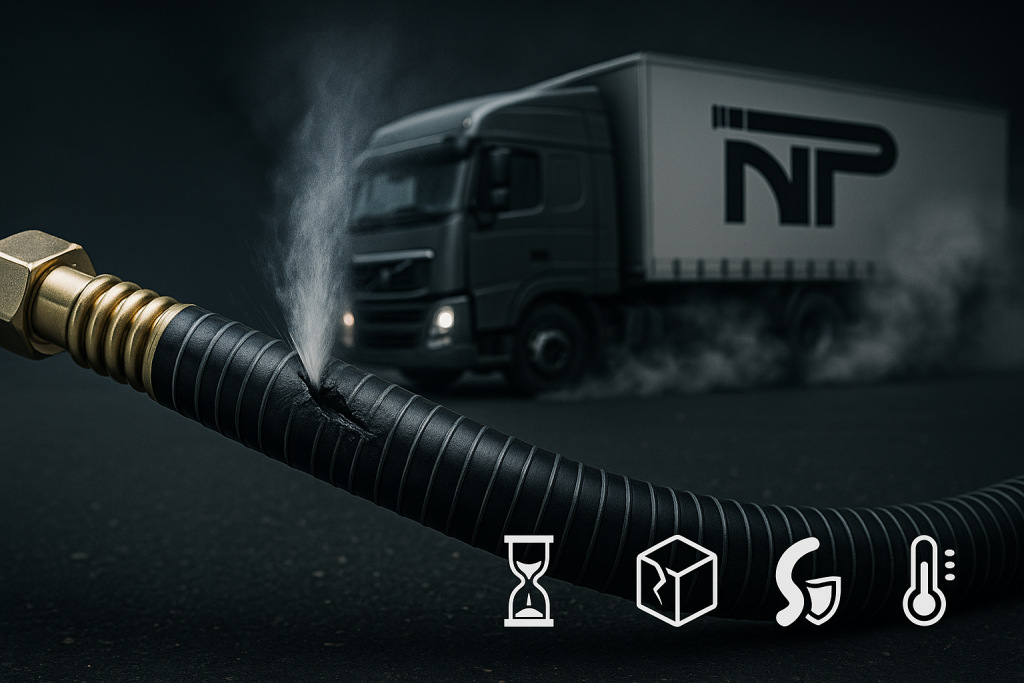
The braking system of trucks, as one of the most vital safety components in heavy vehicles, relies on the flawless performance of air hoses. These hoses are responsible for transferring compressed air to pneumatic brake components, and even the slightest defect can disrupt the entire system. Among potential failures, a burst air hose is one of the most dangerous incidents, as it not only affects braking performance but can also lead to sudden stops, collisions, or truck rollovers.
In this article, we explore the five main causes of air hose bursts in trucks and present specialized solutions for each. This guide aims to help drivers, mechanics, and transport companies prevent such incidents and increase hose lifespan and braking system safety.
1. Wear and Tear Due to Age
Air hoses are usually made of industrial rubber or polymer compounds, which over time can suffer from drying, cracking, and reduced flexibility. According to an FMCSA report, the standard service life of an air hose is between 3 to 5 years, depending on climate conditions and usage type.
Recommended Solution:
Replace hoses according to a maintenance schedule (based on manufacturing date or mileage), even if they appear to be in good condition. Record the installation date and check them during periodic inspections.
2. Low-Quality Materials
Many non-standard hoses sold at lower prices in the market are made with recycled or weak material formulations. These hoses cannot withstand high pressure or extreme environmental temperatures, and are especially prone to bursting under conditions like summer heat or sudden braking pressure.
Recommended Solution:
Use trusted domestic brands like Nikoo Payam Sanat Giti, which manufactures its products using high-quality raw materials, advanced equipment, and international standards. Nikoo Payam hoses are ISO-certified and used by leading transportation fleets across the country.
3. Improper Installation and Excessive Bending
In many cases, incorrect connection angles or routing through tight spaces apply localized mechanical stress on the hose body. Over time, this stress causes cracks or tears at stress points.
Recommended Solution:
Use engineered metal clamps, maintain a minimum bend radius (at least 5 times the outer diameter of the hose), and avoid contact with sharp edges. You can also refer to our article on important tips for installing automotive hoses.
4. External Impact and Abrasion
Sometimes, the hose rubs against moving parts, metal edges, or even the ground, which can cause internal damage without any visible signs. These damages worsen over time and eventually lead to a sudden burst.
Recommended Solution:
Perform regular visual inspections along the hose path. Use anti-abrasion sleeves, protective covers, or dual-layer hoses in high-risk areas, especially where movement or vibration is frequent.
5. Freezing or Extreme Temperatures
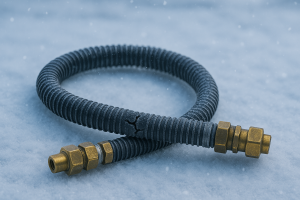
In cold regions, moisture in compressed air can freeze inside the hose, leading to internal wall rupture. Conversely, high summer temperatures can cause the rubber to soften and lose strength.
Recommended Solution:
Use air hoses resistant to extreme temperatures, equipped with thermal or cold-protective layers. It is also recommended to drain moisture from the air tank daily to prevent vapor from reaching the hose.
Conclusion: Prevention Is Better Than Disaster
An air hose burst in a truck is no minor issue—it can cause brake system failure, disruption of transportation operations, financial loss, and even danger to human lives. By understanding risk factors and implementing engineering-based solutions, this problem can be easily avoided.
✅ If you’re looking for high-quality air hoses resistant to pressure, abrasion, and temperature, Nikoo Payam Sanat Giti, with over two decades of experience in manufacturing specialized automotive hoses, offers the best solutions for your fleet.