What Are the Dangers of Counterfeit Hoses?
From fuel leaks and fires to engine damage — understand the serious consequences of using substandard parts.
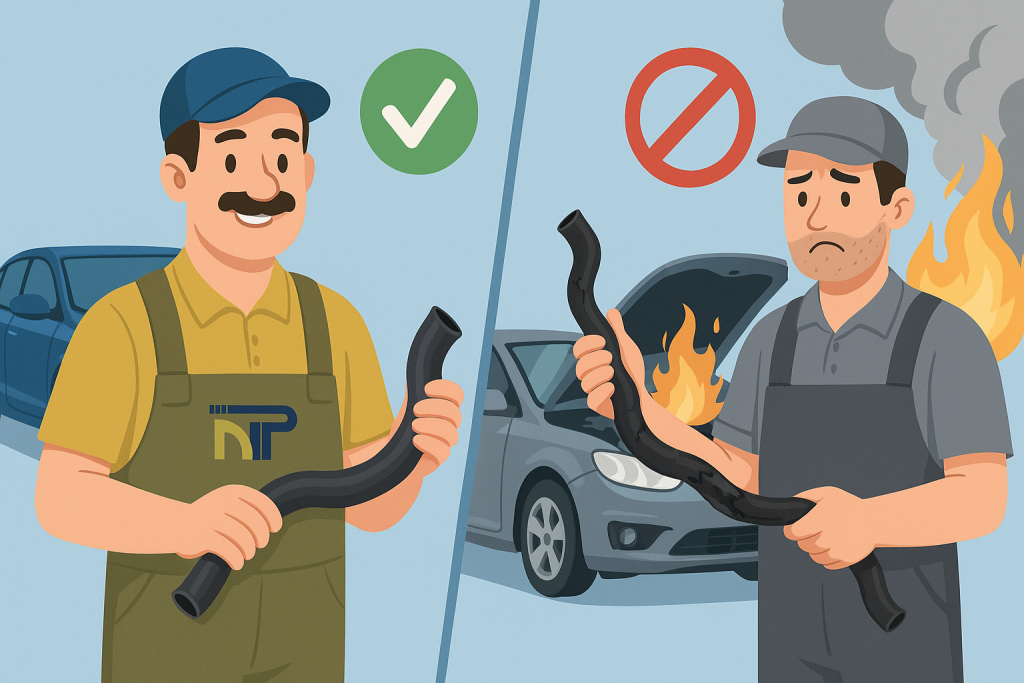
At first glance, it may not be easy to distinguish a genuine hose from a counterfeit one. However, this seemingly minor difference can lead to fuel leaks, engine fires, system failure, and even pose life-threatening risks. Many car owners opt for counterfeit hoses simply because they are cheaper — but this cost-cutting choice can quickly turn into an expensive and dangerous mistake.
In this article, we explore the major risks of counterfeit hoses, how to identify them, and how to avoid damage to your vehicle.
Risk 1: Fuel Leaks and Fire Hazards
The hose plays a critical role in delivering fuel. When a counterfeit hose is used, this vital channel becomes unreliable. Poor-quality and non-standard materials reduce the hose’s resistance to pressure, heat, and fuel. As a result, cracks, tears, or leaks may occur around the engine. In the presence of heat or electrical sparks, such leaks can ignite and cause a vehicle fire.
Risk 2: Toxic Fumes in the Cabin
One sign of a counterfeit hose is the release of fuel vapors. These vapors often escape through tiny cracks in the hose and can enter the cabin via the ventilation system. Inhaling such gases may cause headaches, dizziness, nausea, and in severe cases, poisoning. The presence of a gasoline odor inside the car is a serious indicator of a malfunction in the fuel system — often linked to non-original hoses.
Risk 3: Reduced Engine Efficiency and Increased Fuel Consumption
Counterfeit hoses usually differ in internal diameter, texture, and structural quality. This leads to:
-
Irregular fuel delivery to the engine
-
Improper system pressure
-
Air leaks or contamination entering the fuel line
These disruptions result in lower engine performance, higher fuel consumption, and problems with the fuel pump or injectors.
Risk 4: Damage to Other Vehicle Components
The use of a counterfeit hose doesn’t just affect one part — it can trigger a chain reaction of failures. For example:
-
In hydraulic systems: Leaks lead to pressure drops and damage to the hydraulic pump
-
In the EVAP system: Escaping vapors can harm the canister and sensors
-
In the cooling system: Hose ruptures may cause the engine to overheat and damage the head gasket
A cheap, low-quality hose may end up causing costly repairs across multiple systems.
How to Identify a Counterfeit Hose
To avoid falling into the trap of using non-genuine parts, watch for these signs:
-
No brand name, serial number, or production date on the hose
-
Excessive softness or abnormal stiffness
-
Strong smell of recycled rubber
-
Lack of proper packaging
-
Suspiciously low price compared to trusted brands
-
No warranty or technical certification
Why It’s Crucial to Use Standard Hoses
Genuine, certified hoses are made from durable, high-quality materials and undergo rigorous testing. They perform reliably under extreme temperatures and pressure. Using standard hoses:
-
Extends the lifespan of your vehicle
-
Reduces maintenance costs
-
Ensures passenger safety
-
Prevents secondary damage
Nikoo Payam’s Final Recommendation
In the world of automotive components, small parts often play big roles — and hoses are a prime example: simple yet vital. While counterfeit hoses may seem like a cost-saving choice at first, they can lead to devastating consequences and massive repair costs.
With years of experience in designing and manufacturing specialized automotive hoses, Nikoo Payam Sanat Giti provides durable, certified products for light vehicles, heavy-duty trucks, and industrial machinery. If you’re looking for fuel, vapor, or hydraulic hoses, we recommend starting with our diesel engine hose collection.
Frequently Asked Questions About Counterfeit Hoses
1. Why does the smell of gasoline suggest a counterfeit hose?
Counterfeit hoses are often made of poor-quality materials that can’t contain fuel vapors. As a result, vapors leak and fill the cabin with unpleasant and dangerous fumes. If you detect this smell, check out our guide to eliminating fuel odors.
2. Can a counterfeit hose really cause a fire?
Yes. Fuel leakage near hot engine components or electrical systems is one of the leading causes of vehicle fires — especially when using hoses that lack heat and pressure resistance.
3. What should I do if I smell gasoline inside the car?
Turn off the vehicle immediately, keep the windows open, and inspect the fuel, vapor, and EVAP hoses. If there are any signs of leakage or deterioration, replace the hose right away.
4. Can counterfeit hoses look identical to genuine ones?
Yes. Many fake hoses mimic the appearance of genuine products but lack key identifiers like branding, quality texture, and proper packaging.
5. How can I make sure the hose I’m using is standard and safe?
Look for printed markings on the hose, durable construction, warranty coverage, and certified packaging. You can also browse our full selection of light and heavy-duty vehicle hose connectors for more reliable options.
Conclusion
A counterfeit hose is not just a low-quality part — it can be the very piece that compromises your car’s performance, endangers passengers, and leads to unexpected repair costs.
By understanding the signs and risks of fake parts and making informed decisions, you can prevent many of these issues.
Choosing a certified hose is more than a purchase — it’s an investment in your vehicle’s safety, reliability, and future.